Should You Wear a Sports Guard?

Whether it is Little League, High School, professional sports, or just a friendly event, a sports guard can save your mouth. It does not matter the level of sports you are playing; a sports mouthguard should be used in all cases where you have a risk of injuring your jaw.

A sports guard can help protect injury to the jaw, chipped teeth, and even loss of teeth. This warning should not be taken lightly comma because it can save you a lot of money, pain and trouble in the future. Replacing permanent adult teeth is no easy matter, and it may be very expensive.

Take a look at how mouthguards work, dangers of not wearing them, and the types of mouthguards available to you today.

How do Mouthguards Work?

Mouthguards are like airbags for your mouth. They absorb the force that otherwise would have struck your precious teeth and ruined your beautiful smile. Mouthguards absorb and redistribute the force that strikes them across all of your teeth and jaw more evenly so that there is less damage.

What Can Happen If I Don’t Wear A Mouthguard?

Without proper protection you put not just your teeth, but the health of all of your mouse at risk. When a force strikes you in the jaw, the jaws may crash together causing teeth to chip, break, or fall out completely. Further damage may be done to the jaw bone and TMJ joint as well.

Types of Mouthguards

Are many types of mouthguards available on the market today. Some of them are higher quality than others so it is very important to do your research before purchasing a mouthguard. Remember, that the money that you spend on this mouth guard maybe saving you hundreds or thousands of dollars in dental surgery in the future.

Why You May Need a Tooth Extraction

Oral bacteria are present in everyone’s mouth, no matter how well you clean your teeth. This bacterium produces harmful acids that destroy enamel. When allowed to accumulate, these critters form a sticky layer that adheres to teeth. The unremoved plaque will eventually eat a hole in tooth enamel, commonly known as a cavity.

If the cavity continues to spread, the bacteria can destroy the tooth structure and travel into the center nerve. When this happens, patients experience increased sensitivity or pain. The decay also causes the tooth to weaken and become more vulnerable to cracks, chips, and breakage.

Luckily, an injured tooth can be treated with root canal therapy and a dental crown. But if the severity of the decay is irreparable, extracting the tooth may be the only solution to protect your oral health.

What to Expect During Your Tooth Extraction

Tooth extractions are performed all the time. First, it will be determined if an antibiotic is needed pre- or post- tooth removal. Then, the surrounding area will be numbed.

The tooth is then extracted without pain. If it is an impacted wisdom tooth, any bone or gum tissue trapping the tooth will be removed first. After the path is cleared, the impacted tooth can be freed with forceps. Your dentist will use a gentle rocking motion to loosen and remove the tooth.

Dissolvable stitches may be used to close the surgical site. Sometimes, a bone grafting is needed to maintain healthy bone. This added bone may be necessary if an implant is your chosen tooth replacement option.

What to Do After a Tooth Extraction

You will be provided with aftercare instructions post-extraction. Typical instruction after tooth removal include:

  • Prop up your head and keep it elevated until you are no longer bleeding.
  • Put pressure on the treatment area by biting on gauze, until bleeding subsides.
  • Apply an ice pack to the cheek on the side of the extraction.
  • Avoid physical activities and contact sports until the empty socket is covered with a scab.
  • Keep the extraction site clean by gently brushing the area around the socket.
  • Don’t tamper with the surgical area.
  • Take prescriptions as directed and contact your dentist if you experience unusual itching or swelling.
  • Stick with soft foods while the empty socket heals.
  • Stay hydrated.

For at least 24 hours, do not smoke, use a straw, or make any sucking motions to avoid disturbing the blood clot. If the clot dislodges, it can lead to a painful dry socket.

If a primary tooth was taken out, it might take a 1 or 2 day to recover. With the extraction of an adult tooth, expect several days of tenderness at the treatment site.

No matter what lead to the need for your tooth extraction, we are here to help. Contact our dental office at +1 587.316.9728 to schedule an appointment today.

The Connection of TMJ and Posture: Postural Phenomena

A more common problem than probably realized, temporomandibular joints, also known as TMJ can be the main culprit causing your headaches, paw pain, or even soreness. If you’re wondering if you suffer from this syndrome, keep reading to find out some of the symptoms and ways to improve or alleviate TMJ discomfort.

What is TMJ?

TMJ or TMD are both acronyms used interchangeably to describe TM joints or a disorder afflicting this part of your skull. TM joints are located on either side of your head and are responsible for all of the major movements of your jaw. Coupled with the muscles, ligaments, and bone in your face, the TM joints are responsible for your chewing, yawning, speaking and the opening of your mouth.

How Does Posture Cause TMJ Disorders?

All of our bodies are designed to work at their best when all of your joints, bones, tendons, and muscles are properly aligned. Any posture de-alignment or abnormality can ultimately affect your health, sometimes in the form of TMJ or TMD.

Living with a TMJ disorder can be hard, that’s why seeing a chiropractor or just trying to generally improve your posture is an inexpensive place to star treatment.

Ways to Improve Posture to Alleviate TMJ Discomfort

Trying jaw stretches, allowing your jaw to relax and even taking up stress reduction therapy are all ways to alleviate any pain or discomfort associated with TMJ. Even yoga, Pilates, physical therapy or guided stretching has proven a big help to some.

At Toothworks in Calgary, AB, we don’t want to see any of our patients in pain. Thanks to this, we will do everything in our power to help you if you experience any kind TMJ discomfort. Give us a call today to experience a pain-free way of dentistry!

Shining a Light on Migraine Relief

Migraine pain makes it very hard to ignore. The accompanying throbbing headaches can last for hours or days in severe cases. While millions of Americans are affected, the cause is still relatively unknown.

What Is a Migraine?

A migraine is much different than a normal headache. A headache can cause pain and pressure on both sides of the head similar to the feeling of a belt are around your head and being squeezed. Uncomfortable, but most people can work through them. Common types of headaches include sinus, cluster and tension headaches with tension being the most common.

Adversely, a migraine is recurrent and throbbing head pain that focuses on one side of the head. Sufferers will experience pain behind the eyes and/or ears and can additionally lead to nausea and vomiting, vision difficulties and sensitivity to both light and sound. While it is unclear what causes them, there are certain factors that trigger them. Family history is often a big factor, but a person’s sensitivities to other triggers can be very different. Additional triggers often include poor sleep, age, alcohol, sex, food, and hormonal changes.

Migraines and Light Sensitivity

Increased sensitivity to light is one of the most common symptoms of a migraine. Many prefer total darkness to rest and deal with the pain. A recent study tried to gather more information about light sensitivity and migraines and found that green lights were much less harsh when compared to red, blue and amber lights. While the green light did not cure the headache, it is a significant discovery and will lead to further testing.

How Do We Treat Migraine Headaches Now?

While hopefully a green light therapy program can be created in the future, for the time being, many rely on medications to treat the symptoms. At Toothworks Calgary Dentist, we offer injection therapy to help with jaw pain that often leads to migraines. However, understanding your triggers and avoiding them can be the best medicine possible.

Facts About Dental Implant Pricing

It’s safe to assume that most people would love a radiant and bright smile that could give them the confidence to take on new endeavors. Unfortunately, the reality is that not everyone has this kind of smile naturally. Even the use of dental implants can seem daunting for some patients that may have the financial aspect of the situation on their minds. Here at Toothworks, we want to make this process as easy as possible. We just want to see you leave our office with a renewed sense of self that can come from a new smile. Before all of that though, take the time to read this article to see the reality of the cost of dental implants.

Affordable Dental Implants: Fantasy or Reality?

If you find yourself less than satisfied with the appearance of your teeth or suffering from tooth loss for a variety of reasons, there is no reason you should take the initiative to make a new mouth for yourself (Not to mention at a reasonable price as well.)! While making dental implants cheap isn’t a feasible feat, we hope to keep

CALL US NOW – 587.351.7735

the fees straightforward, but the term “affordable” is rather relative. What may be cheap for one group of people, could be absolutely preposterous for another. The average cost for a single dental implant, meaning one single tooth is about $4,000. Our office has significantly lowered this figure for the benefit of our patients. How can we keep our dental implants affordable for you?

How We Lower the Cost of Dental Implants

By making the dental implant process much more streamlined and organized, you can be safe from hidden fees. From the consultation to the digital images, you can be sure we won’t charge you in chunks as the process goes on. Dental implant financing keeps the costs straightforward, meaning you know what you’re paying for and why.

What’s the Deal with Invisalign?

Crooked or misaligned teeth can make cleaning them difficult, and even more than that, they can hurt your self-confidence. So you’ve decided that you want to straighten your teeth, but now you have two choices: wire braces, or Invisalign? Ultimately, the choice is up to you. You already know the deal with wire braces — they hurt a lot, they are really noticeable, and they have sharp little wires and brackets that are always poking at you. So, what’s the deal with Invisalign?

A Little Information About Invisalign

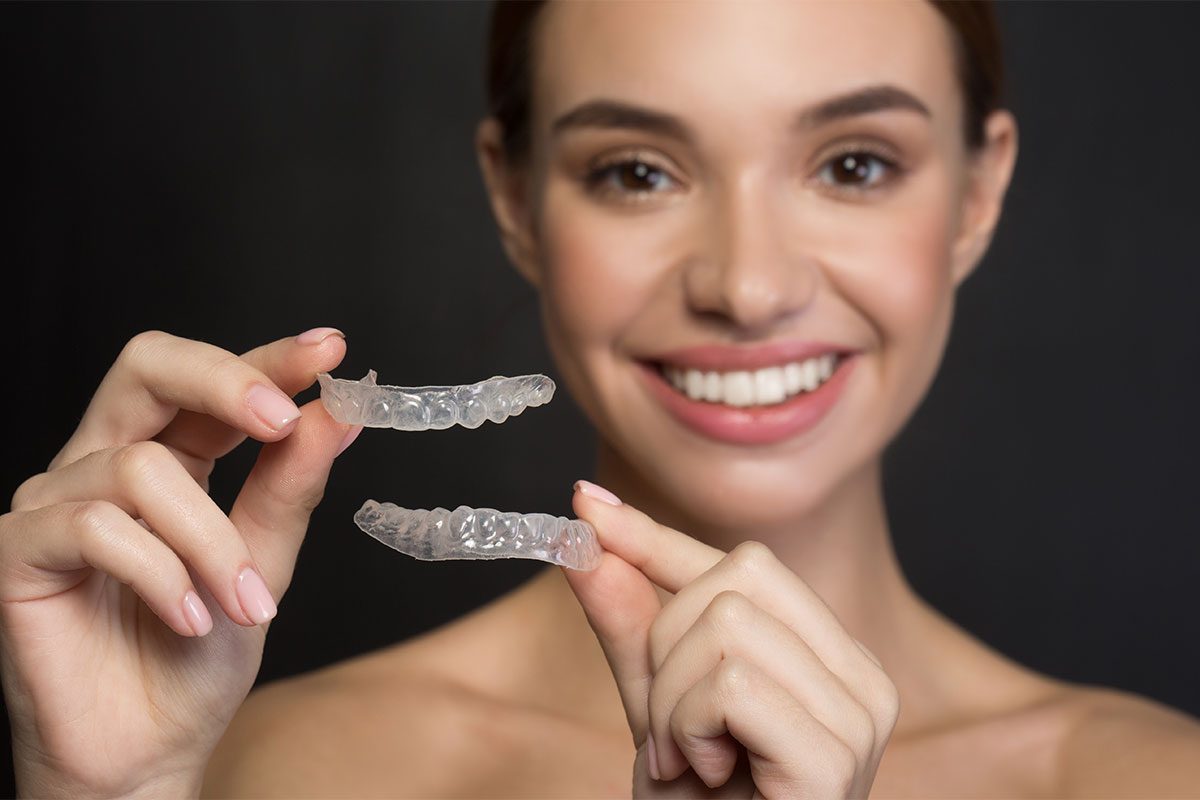
The difference between Invisalign and traditional braces are mostly clear (no pun intended). Aesthetically, they are complete opposites. One is clunky, metallic, and can even change the way your facial structure appears, while the other goes largely unnoticed.

However, there are quite a few benefits to Invisalign that you might not have thought of before.

Two Huge Benefits of Invisalign

One huge benefit of Invisalign is that your mouth is infinitely easier to clean than with traditional wire braces. People with wire braces have to worry about every little piece of food getting stuck in every little nook and cranny. They are hard to keep clean, and because of that, many people even notice that their breath is smellier with wire braces than without. You don’t have this issue with Invisalign! You can just take them out of your mouth while you eat, brush your teeth like normal, then put them right back in!

You don’t have to give up any foods! While sugary foods are still good to avoid for the general health of your teeth, you don’t have to give up all these different kinds of foods like hard candy, or beef jerky. With Invisalign, you can eat like normal!

There are even more benefits to Invisalign that are not discussed here. If you want to know more, stop by our office or give us a call today!

Good Dental Hygiene Impacts Overall Health

Regardless of how often and how thoroughly you brush and floss your teeth, your mouth is abounding with naturally occurring bacteria. Although you need some level of good bacteria for your health, harmful bacteria can lead to severe illnesses. It is essential for your general health to practice good dental hygiene. Our dentists at Toothworks are always available for frequent examinations and helpful tips. Read on to learn how our oral hygiene impacts our overall general health.

Maintaining Oral Health Throughout History

Oral hygiene has been an important issue since the start of humanity. Some historical methods of maintaining oral health include using herbs to treat infected gums. Another civilization used beer to numb tooth pain. The natural bacteria found in beer are similar to those in the antibiotic tetracycline. From the very beginning, we knew dental hygiene had an impact on our health.

Dental Hygiene and Gum Disease

Today’s biggest dental hygiene challenge is gum disease. Gum disease affects 47.2 percent of Americans. Why such a high number? Simply put, people ignore the bleeding and inflammation in their mouths. Imagine, however, if any other part of your body was suffering from the same symptoms. You would immediately find a solution. Why should it be any different for your mouth? The longer you ignore your gum disease, the more serious the consequences are. Your mouth is the gateway to the rest of your body. Untreated gum disease can lead to heart attacks, arthritis, and even cancer.

We can’t stress the importance of taking care of your oral health enough. This means quit all your bad dental hygiene habits now! It will save you money and pain in the not-so-distant future. Toothworks in Calgary suggests biannual appointments with your dentist to maintain good oral health. Call us today to schedule your next appointment!

Fluorosis Stains – Will Dental Veneers or Teeth Whitening Help?

It is no secret that most of just want a beautiful, straight and white smile! Unfortunately, not all of us have this naturally. There are many options out in the dental world that allows us to get us as close to our ideal smile as possible – between races, teeth whitening and even veneers. What about the select few of us that have something called fluorosis stains? What exactly is this kind of stain? What is the best option for me to move forward with to get my smile and white and bright as possible? Keep reading to find out!

Fluorosis Stains

Fluorosis stains occur in those that have an excess of fluoride consumption during early childhood when tooth development is at its most active. These stains manifest themselves on the surface of your tooth by discolored, usually brown, stains. Unfortunately, these kinds of stains are intrinsic and virtually impossible to remove by means of teeth whitening. The best method of treatment is done by a cosmetic dentist that carefully analyzes and assess your best options. Ahead are some viable options for getting your tooth color streamlined and uniform.

Dental Bonding for Limited Stains

Depending on the extent of the staining on your teeth, dental bonding may be all you need to make the color on your teeth monochromatic. This bonding, put on by an experienced cosmetic dentist, will cover the stains, but still, maintain the translucence of a natural tooth. No one would be able to tell that your teeth were even stained in the first place

CALL US NOW – 587.351.7735

Dental Veneers for Extensive Stains

If the staining on the surface of your tooth covers most it, then your best option might be porcelain veneers. Veneers cover the entire surface of the tooth, essentially giving you an entirely new tooth. While a bit costly, this is your best option for severe stains.

It is important to keep in mind that to get any of these procedures done requires a careful selection of an experienced and trusted cosmetic dentist to ensure you are left with a natural looking tooth giving you newfound confidence.

Advancements in Dental Care Over the Years

There is no doubt that dentistry has (more or less) quickly evolved from a stone-age practice, to something on par with the most technologically advanced medical procedures. You might be surprised to find that for thousands of years, although general doctors and physicians existed in human culture, a real dental practice didn’t come into play until less than 175 years ago.

The Father of Modern Dentistry, Pierre Fauchard, started the first dental college in 1840. He was the first person to publish work suggesting that there was a correlation between sugar and cavities. Before this time, any dental work in the western world was generally performed by your family doctor or even your barber! Dental care was little more than extracting troublesome teeth with no real thought put into cause or care.

Where We Are Today

It wasn’t until recent years that dental practices have moved from traditional film-based x-rays into the modern age of high-tech digital x-rays. Digital x-rays are now widely available and make life much easier for dentists and patients alike. A digital image is much more reliable, easier, and faster to develop than traditional film.

Not only can these x-rays be used to show the alignment of teeth, but also to look for cavities. Another way that dentists are able to search for cavities and decay is the laser. Lasers are now being widely used in modern medicine. Dentists can now probe your mouth with a high-tech laser to search for decay and cavities before they become too much of a problem.

Beyond these two simple advancements, there has been extensive advancements all over dentistry including sedation dentistry. Sedation, and the subsequent procedures have been made easier by the use of lasers in place of scalpels as well. You are in better hands today when it comes to dental care than ever before!

Why You Should Visit a Kid-Friendly Dentist

To prepare your child for a lifetime of fear-free dental visits, it is important to start with a kid-friendly dentist. We all understand the importance of good oral health, but have you considered the impact of your child’s dental visits? If the first encounters are not positive, kids can quickly develop dental anxiety. A negative association with dental visits can last into adulthood. Most dentists are equipped to treat young patients, but not all have the skills to build comfort and a good rapport with kids.

Countless adults avoid seeking necessary oral care due to dental anxiety. We want your child’s dental visits to be positive experiences that help pave the way for a lifetime of good oral health.

Tips for a Good Appointment with a Kids Dentist

There are ways to prepare for your child’s dental visits before heading to our office. This will help him or her to know what to expect each time, and to feel more at ease. Start by borrowing some library books focused on good oral health and dentist visits. Try to find reading material that features familiar characters or your child’s favorite animals or cartoons. You can also view PBS programs or educational kid’s shows where a likable character goes to the dentist. This will help your child visualize what the experience will be like.

Kid friendly dental staff will always welcome parents to come in and tour the treatment facility before the scheduled appointment. Since kids are more comfortable in a familiar environment, the first dentist experience is very important. Proactive parents who check out the dental clinic first get to meet the team ahead of time, so the actual appointment is not with strangers. The dental staff can show kids where the toys and books are located, what the exam room looks like, and how to get to the bathroom.

Follow up with your child when you get home and address any lingering concerns or questions that are yet unanswered. You can also encourage your child to role play with dolls or stuffed animals, and give the toys a mock dental exam.

Maintaining Good Oral Health

As a family-oriented dental office, we are serious about kid-friendly dentistry. Children deserve to have access to excellent dental care for optimal oral health for years and years. We highly recommend twice yearly teeth cleanings and oral health exams, and professional fluoride treatments for added cavity protection.

We also offer dental sealants that serve as a barrier on the chewing surfaces of back teeth. Sealants prevent bacteria, leftover food debris, and plaque from building up in the hard to reach deep crevices and causing cavities.

As a kid-friendly dentist office, we are here to provide whatever your child needs for good oral health in a welcoming atmosphere.