Why Do Food And Drink Taste Different After Brushing?

We’ve all been there: you’ve just brushed your teeth, forget about it and take a big swig of orange juice. You’re expecting some delicious refreshment but… yikes!

It’s not just orange juice, either. Many foods taste slightly odd after brushing your teeth. So, why is it that food and drink taste so different after you’ve just brushed your teeth?

Our common toothpaste contains an ingredient known as sodium laureth sulfate. It is this ingredient that so drastically alters the taste of certain foods you usually enjoy. This ingredient usually appears on the label as SLES or SLS.

So why do we have it in toothpaste in the first place? Sodium laureth sulfate is a foaming agent that essentially makes it easier to spread toothpaste around your mouth while you’re brushing.

Without it, your teeth brushing experience would be a whole lot different and you wouldn’t be able to perform the same comfortable brushing action as normal. Additionally it has an emulsifying action that contributes to the removal of surface stains and helps dissolve debris.

So that’s great, right? It certainly is for brushing your teeth, but has the adverse effect of affecting your taste buds in two very significant ways. One is that it suppresses the receptors on your taste buds so they fail to pick up on sweetness quite so acutely. At the same time the sodium laureth sulfate boosts any bitter tastes, so what you finally end up tasting is bitter to the extreme!

Fortunately for everyone this doesn’t last. Around half an hour after brushing your saliva will have diluted everything away and your mouth will be back to normal.

So, if you’d like to take a big swig of orange juice in the morning, just remember to try and do it before you brush, it’ll be a much better start to the day!

4 Easy Ways to Cut Down On Sugar

It’s always a good idea to start making better choices regarding your health and diet. One way to do this is by reducing the amount of sugar you consume in your diet. It’s a good idea for your internal health, and also for your teeth.

It can be hard to cut back those cravings brought on by a sweet tooth, but fear not! Here are some foolproof tips for taming that sweet tooth.

Drink plenty of water

We often mistake our craving for sugar as a call from our sweet tooth, when the reality is many times we’re simply dehydrated. If you’re tempted to reach for a sugary snack, try having a glass of water instead, it may be all you need.

Snack well

When you’re craving sugar, it’s usually a little snack you’re after. For this reason it is smart to have some healthy snacks nearby. Fruits and nuts are great, especially berries. You could even try freezing fruit and then blending it to make yourself an ice cream!

Read the label

Labels are there for your help. When you’re shopping for healthy food, be sure to check the labels on everything you buy. If you see sugar high up the list, drop it and look for an alternative. And don’t be fooled just because something says ‘now with less sugar’ or something similar – be sure to read the label thoroughly!

Clear out your cabinets

If you’re seriously worried you’ll be tempted, the best thing that you can do is clear sugar out of your house. If it’s not there, you can’t have it. Throw out all the cookies, the ice cream, the cupcakes, the muffins, the frozen food and the fizzy drinks!

Cutting out sugar isn’t easy since it has made its way into many of our everyday meals, but by staying aware and being determined, you can drastically cut down your sugar intake to lead a healthier life.

Scheduling Your Child’s First Dental Visit

As a new parent, we bet you were over the moon with joy when your baby’s first tooth appeared. Now that the baby finally has a tooth, it’s high time that you start caring for their dental health. If you are a new parent, you must be wondering when you should take your child to visit the family dentist for the first time. According to American Academy of Pediatric Dentistry, your child’s first dental visit should be by their first birthday. Studies throughout the US have shown that children of preschool age are the most vulnerable to cavities. Therefore, in order to prevent early childhood tooth decay, parents need to focus on early detection of cavities, proper dental hygiene, and diet management.

As a new parent, your child’s wellbeing is of utmost importance to you. At the first dental exam, ask for advice regarding how to take care of an infant’s teeth, the proper usage of fluoride, potential hazards of finger and thumb sucking, ways to prevent injuries and damage, development of teeth, and the relationship between dental health and a proper diet.

Getting a baby’s teeth clean in the coming years is going to be a tricky job unless you learn to do it well. In this post, we tell you all the details regarding choosing a dentist for your child, what to expect on your child’s appointment day, and how you can protect your child’s teeth from dental issues and diseases.

Choosing the Dentist

There is no doubt you need to choose a reliable and child friendly dentist for your toddler for their first dental visit. To get things right, try calling a few offices and ask, “At what age should my child have their first dental exam?” Choose only those offices that agree with the ‘first birthday first dental visit’ theory and proceed. Also, it’s important that you look for a pediatric dentist i.e., dentists who specialize in children’s dental care. For this, check your local telephone directory, ask for advice from fellow parents, or search online for the nearest dental clinics.

First Visit: What to Expect

If you’ve taken your baby for a ‘well-baby’ check at a physician’s office already, then this dental exam is going to be something similar. First of all, the doctor is going to take a look at your child’s history for possible dental issues. Next comes the part where he responds to your concerns and any questions you might have. Here, you should talk about your baby’s overall teething, dental habits, and development.

Now comes the most crucial part. The dentist will examine your child’s teeth in such a way that both you and the dentist can see the teeth clearly. At this stage, you can see tooth alignment and any signs of trouble.
The dentist will show you how to clean your baby’s teeth properly, giving you a chance to practice. They may also clean your child’s teeth at the session. They may apply fluoride only if your child has a risk of developing cavities. Feel free to ask questions regarding good oral hygiene and practices.

Collecting Information

As you’ve probably understood by now, this first dental exam is going to be more of an informative session for you regarding your child’s oral hygiene. You’ll have an idea about which foods to avoid, how to brush the baby’s teeth, and how to prevent dental diseases. If your child has oral habits such as thumb sucking, the dentist will also ask about it. Make sure that you schedule another visit six months later or according to your dentist’s advice.

How effective are Dental Implants

The words ‘dental implants‘ may sound scary, but don’t let your worries get the best of you. In modern times, it is the most effective way to replace your missing teeth. It can be very embarrassing if your front teeth are missing. Why should you stop smiling if there is cutting edge technology? In order to understand what they are, you need to first know a little bit about your teeth. Basically they have two parts; the crown and the root. The crown is the shiny white part that you see when you smile. The root is embedded deep into your gum and helps support your crown.The procedure involves both replacing your root and crown to give an everlasting smile.

How does it Work?

It’s a simple two step procedure of replacing your root and fixing a prosthetic crown on top of it. The first step is to remove your root by a minor operation and replacing it with a titanium implant. It will be embedded deep into your jawbone and needs to heal for 12 weeks before attaching the Crown. When your gum is fully healed around the root implant, the dentist can go ahead with the next step. The crown is then modeled and colored to match your teeth and secured on top of the root.

Is it Painful?

Since the procedure is done under local anesthesia, most patients don’t experience any pain except some mild discomfort. It is even less painful than extracting your wisdom tooth! After the procedure, you might feel soreness, but the dentist will prescribe medicine for any discomfort that you might face. Moreover, the procedure has a 98% success rate at giving you your healthy smile back!

How effective it is?

Business executive and former supermodel Kathy Ireland was having normal day when suddenly she took a nasty tumble. The accident gave her severe wounds on her face and damaged several of her teeth. Fortunately most of it was reparable; even her teeth! Now after several teeth implants and months of recovery, she got her perfect smile back. The technology for dental implants was first available in the 1970s. It has come a long way since then and chosen by dentists across the board as one of the safest and most effective methods of replacing damaged teeth. So why live with a broken smile when you can have a new one?

Causes and Problems of Sensitive Teeth

Do you feel a sharp pang in your teeth when you eat your ice-cream or take a sip of some hot coffee on a cold winter night? If you do, then you might have sensitive teeth. In the case of sensitive teeth it’s recommended you make an appointment to find out if you really do have sensitive teeth or another dental issue. If you do, then you need to be careful about what you eat, what you drink, how often you brush or floss your teeth. People, who have sensitive teeth, often do so due to some underlying problems like gum disease, tooth decay, exposed teeth, worn out fillings, or damaged root canal.

You start to have sensitive teeth because there has been some damage to the layer of enamel that is right above your gum line. The function of this enamel is to protect your teeth from chemicals and harmful bacteria in food. There is another layer for protection under the gum line which is called the cementum and this also has the function of protecting the root of the teeth. Below this layer (the cementum) and the enamel is a layer called the dentin, which is thinner than the layers of cementum and enamel. Dentin has some microscopic tubules, which are what the cementum and the enamel are there to protect. If this protective layer suffers any damage then the microscopic tubules of the dentin create a gap for letting in hot, cold, sticky, and acidic foods which then reach the cells and the nerves with the tooth and cause that sharp pang of pain that you feel when you have certain food. Dentin also gets exposed to food when the gums recede, eventually causing hypersensitivity.

The problems causing sensitive teeth varies for each person, therefore the treatment also varies to a certain extent. You should never take the advice of another patient and do what they have done. The problem may get worse if not treated in the right way, so it is suggested that you go to a professional dentist and get your teeth looked at. ToothWorks Calgary is one of the many clinics that has certified dentists as well as the authority to prescribe you with the proper medication. Contact us today for an appointment with our amazing dentists who will take the greatest care of you. Say goodbye to hypersensitivity with our help and go back to enjoying your food with every bite.

A Basic Introduction to Dental Implants

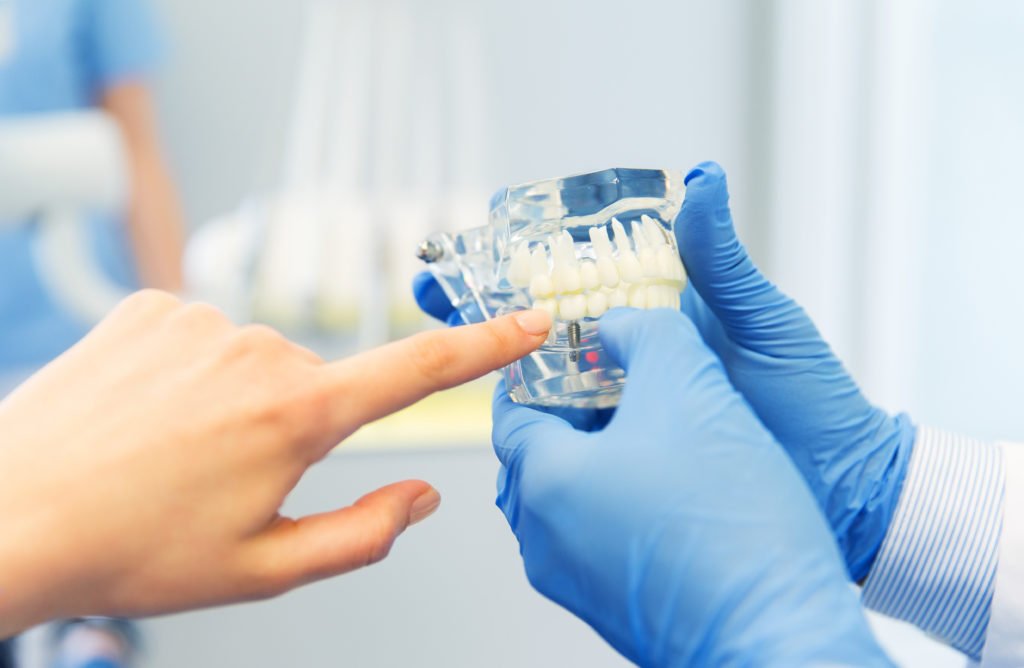
Dental implants are best suited for people who have gaps between their teeth, an entire tooth missing, cavities, and crooked teeth. The application of implants includes setting a small titanium screw into the bone of the tooth in a position where the root is. Once the screw is set in place, a prosthetic tooth is attached to the base of the screw, which holds the prosthetic permanently in place so that it does not loosen up. This makes the replacement tooth sit solidly, filling in the gap of the removed tooth.

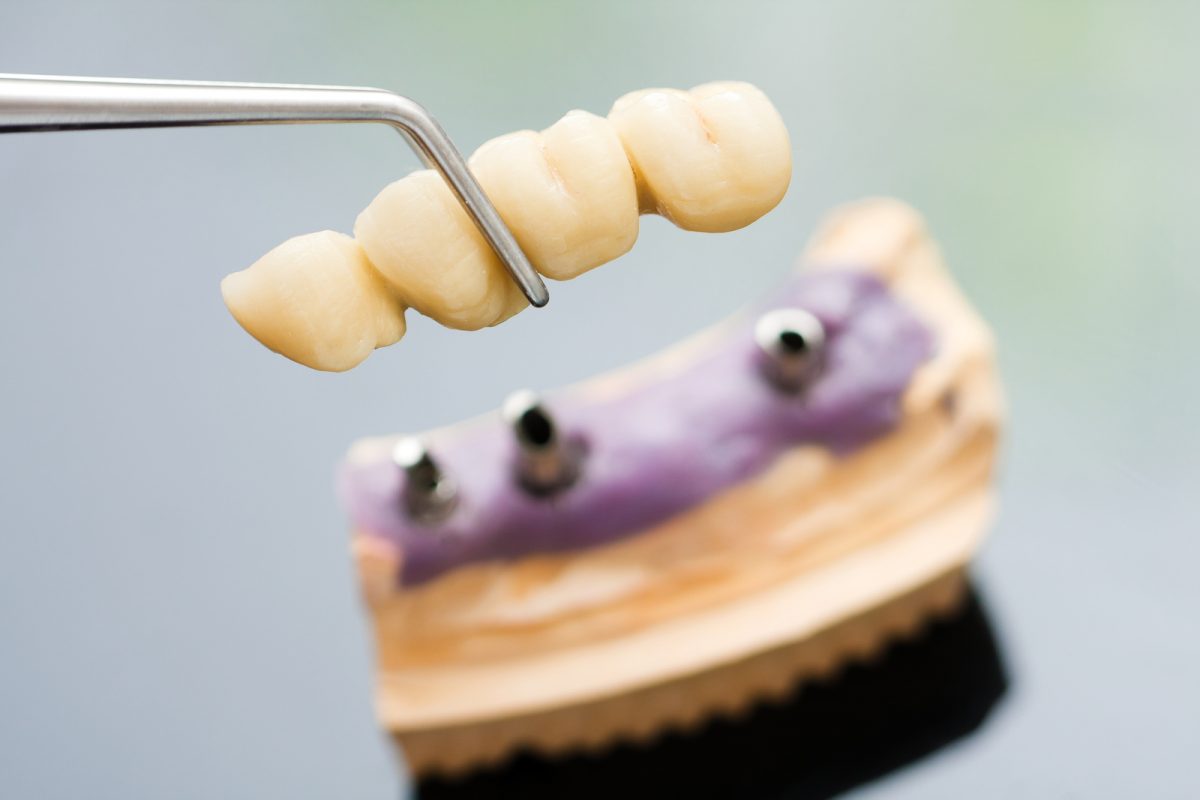
Dental implants are healthier for the patients’ mouths than dentures or bridges, and they also look more natural when compared to the other two. Dental bridges last for a long time, but dental implants are permanent and easier to adjust to. The process of installing dental bridges is more complicated, and if not done correctly, it might make the teeth weaker and prone to further damage in the future as the bridge starts to wear off. Another reason to select dental implants is that these are permanently attached to the jaw bone with the small titanium screw, whereas dental bridges and dentures only cover the missing teeth from the outside. This means that the jaw bone surrounding it may get damaged and deteriorate if that area is not cleaned properly.

There are two types of implants:endosteal and subperiosteal.Endosteal implants are more commonly used among patients. Your dentists will examine your current dental health as well as your previous medical and dental history, thereafter, determining which type is best for you. However, in order to get adequate consultation on this procedure, setting an appointment at our clinic can help provide information and answers to any concerns you may be having.Undergoing surgery is serious and the dentists at Toothworks Calgary are highly experienced in such procedures. At Toothworks, our dentists will examine your teeth thoroughly, check your medical records, and give you the exact type of treatment that you need.

Bad Dental Habits to Quit Right Now

When it comes to our teeth, we can fall behind on taking the proper care for them at times. Instead of quitting our bad habits, we tend to pile up on them. What we fail to realize is how much damage we are causing to our teeth in the long run. By becoming more aware about the bad dental habits that we possess, we might be able to cut it down or get rid of it altogether.

Chewing Ice

Even though chewing ice might satisfy a crunching or chewing sensation some people crave, the hard texture of the ice and the cold actually causes harm to your teeth. They can do this by cracking or chipping them. So, to cut back on this bad habit, try switching to alternatives. This could include chewing on sugar-free chewing gum or drinking normal temperature water.

Drinking Soda

Soda is both acidic and sugary. This is the case with diet sodas as well. So if you have a habit of drinking soda on a daily basis, then you could cause more damage to your teeth than you realize. This is because the consumption of acidic drinks coat your teeth in fluid which causes decay. It has also been found that alcohol and juice are equally harmful in excess and if your teeth aren’t properly cared for after consumption. So, in order to remain on the safe side, try to drink less sugary drinks and more of water.

Not Brushing Your Teeth Correctly

This would not come as a surprise, since we all have heard our parents complaining about it. The ideal time for brushing your teeth is after every meal, but not immediately. You should wait at least thirty minutes before brushing your teeth after meals. This is because the acid which is usually produced by digestion will go away. In addition, when brushing your teeth, the proper procedure also needs to be adopted. You need to brush your teeth in small and gentle circular motions. This is because brushing too roughly can cause damages to your gums and tooth enamel.

Biting Your Nails

Contrary to what people say, biting nails is also bad for your teeth. In this way, different types of viruses and germs can be introduced to your system. It can cause your teeth to move out of its usual place. In some cases, it has also been found that the tooth enamel has splintered, which can be quite dangerous.

Teeth Grinding – Causes and Prevention

For people who wake up with an achy jaw or a headache, if they notice that their jaw pops and clicks when they yawn or open their mouths too wide – there must be some teeth grinding going on at night. While teeth grinding may not be a severe dental problem, it can cause severe misalignment of teeth and can promote gum disease.

Also known as bruxism, teeth grinding almost always occurs at night. While it has been linked with stress, it can also be caused by sleep disorders or mechanical problems with the teeth, such as missing teeth. If the problem is mild, the dentist will keep an eye on the wearing of the enamel. For serious cases, the dentist may prescribe a mouth guard to wear at night to protect the teeth.

If bruxism is caused by misaligned or broken teeth, dentists will suggest some treatments to correct the problem with crowns or braces. If it is caused by stress and anxiety however, it is a good idea to identify the stress triggers and find ways to relax including jaw-specific therapy, meditation and exercise. Muscle relaxants have helped some people control the problem.

In many cases, teeth grinding is not caused by any of the factors above. It can be a side effect of Parkinson’s disease and Huntington’s disease. Certain types of medications, including antidepressants can lead to bruxism too.

For people suffering from teeth grinding, they should ensure they follow a good dental care routine before suing their mouth guards at night. In addition to this, they should visit their dentist regularly so that the level of damage to the enamel can be checked on regularly.

What is TMJ and How to Stay Away From It

TMJ- Temporomandibular Joint Disorder, is the name or acronym used to describe a collection of dental problems altogether; it is not merely just an isolated dental disorder by itself, but a group on a whole. The problems mainly involve the jaw, that is, the muscles and joints that are around the jaw. Some of the symptoms include having stiff jaw muscles- jaws that are difficult to move about due to the limited and restricted motion; painful popping or clicking in the joint of the jaw; pain while chewing, etc.

TMJ is a very a painful and disconcerting disorder that leaves the person feeling uncomfortable and in extreme pain for an extended period of time. If not treated immediately then your jaw might suffer greater damage and actually come out of its natural alignment. This can lead to chronic teeth-grinding and jaw-popping discomforts that will eventually cause more deep-rooted problems in your dental area.

Some causes of the disease include clenching teeth for a prolonged length of time, damage in the cartilage of the joint due to any traumatic event or medical causes like arthritis, dislocation of the jaw, or for many other reasons. But sometimes, the causes of TMJ can be unknown, and hence, treatment is not always easily available. So, because of the lack of available treatments, it is always better for you to be careful so as not to acquire the disease. As we all know, prevention is always better than cure, and since this particular disease doesn’t really have a permanent cure in the first place, you must take great care so that you don’t get yourself in a bad situation with TMJ.

Some definite ways to avoid it are by taking special care to avoid any injuries to the jaw, any blows to the face, and by fighting the urge to clench your teeth even when under great stress or anger. If your jaw ever feels like its tightening up, then, according to dentists’ suggestions, relax and gently massage your jaw muscles for some time to avoid increasing the tension in the jaw bones- this is a small exercise that will help to relieve the tension from your jaws. Regular visits to the dentist will cover all of these small exercises and also help to maintain good dental health.

Beware of These Common Dental Problems

We want our teeth to be perfect because they are a very important part of our appearance. We also need our teeth to be healthy because they helps us to eat and digest, both of which are a must to keep us in good health. Just brushing your teeth twice is not enough, you must floss between each tooth and go to your dentist for regular check-ups after every few months even if you have no detectable discomforts with your teeth.

Some of the most common and widely occurring dental problems can be kept at bay if only these three precautions are taken. If you’re still being careless, here are a few common dental problems that you might have to deal with:

1. Abscessed Tooth: This is an exceedingly common dental problem that most of us have already faced or have heard about. An abscessed tooth is caused when a bacterial infection reaches the pulp of the tooth and accumulated into the gums, near the jawbone. The accumulation of the infection looks like a small, swollen ball of skin filled with pus that causes pain, bad breath, gum redness, and even fever.

2. Tooth Decay (Cavities): Damaged tooth enamel, in other words, cavities are formed when acid eats away at the tooth and lets plaque inside the enamel of the tooth. Accumulation of further food and sugar into the cavity causes more damage to the gums and worsens the problem, leading to a lot of pain and bad breath.

3. Dry Socket: A dry socket is a cavity at the base of the gum-line, which looks like a hollow area full of bacteria and germs. A dry socket often forms after a tooth has been extracted and the blood supply of the area gets cut off. The area shows the difference in color because the nerves here are exposed and susceptible to more damage.

These are three of the most common problems that most of us have faced or might be at danger of facing. The only way to prevent these is to keep the mouth clean and fresh by regular brushing, flossing and practicing the ritual of visiting the dentist for a thorough check-up and examination after every few months.